Blinatumomab
Key Data
Micromet's blinatumomab (MT103) is an antibody produced using the company's patented BiTE antibody technology. Blinatumomab works by targeting CD19 on B cells and using T cells to eliminate the cancer cells. The drug is in Phase I clinical trials for non-Hodgkin's lymphoma (NHL) and Phase II clinical trials for acute lymphoblastic leukaemia (ALL).
Blinatumomab was granted orphan drug designation in February 2006 by the US Food and Drug Administration for some types of indolent B cell lymphoma, acute lymphoblastic leukemia and chronic lymphocytic leukemia.
The European Medicines Agency (EMEA) granted orphan drug designation to blinatumomab for the treatment of chronic lymphocytic leukaemia (CLL) and mantle cell lymphoma. In July 2009, the EMEA also granted orphan drug designation to blinatumomab for the treatment of ALL.
Micromet was developing the drug in association with MedImmune. In November 2009, Micromet declared that it had acquired the complete rights for the global development and marketing of blinatumomab from MedImmune.
As a result, Micromet terminated the collaboration agreement signed with MedImmune in 2003 for the development of blinatumomab.
Lymphoma types and treatment potential
Lymphoma is a kind of blood cancer that arises in the lymphatic system. The lymphatic system is part of the body's immune system which carries lymph throughout the body. Lymph is a fluid bearing infection-fighting white blood cells known as lymphocytes. Some of the parts of the lymphatic system include the lymph nodes, lymphatic vessels and spleen. These are spread across the body similar to blood vessels.
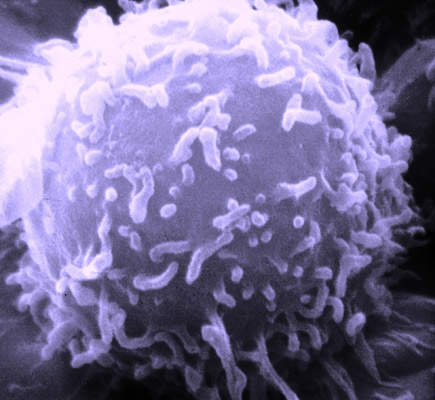
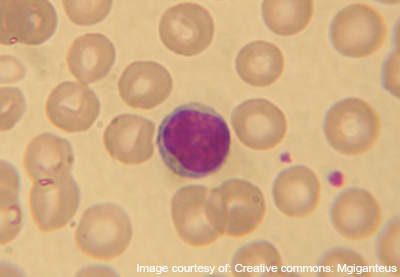
There are two types of lymphocytes: B lymphocytes (B cells) and T lymphocytes (T cells). B cells defend the body against bacteria or viruses by producing proteins called antibodies.
There are many types of T cells, each with a specialised function. Few T cells safeguard the body against viruses, fungi and others against bacteria. Both kinds of cells can transform into lymphoma cells. Lymphoma caused due to B cells is more widespread compared to T cell lymphomas.
In lymphoma, lymphocytes start reproducing in an abnormal manner, pile up and gather in some parts of the lymphatic system, such as the lymph nodes. The affected lymphocytes lose their infection-fighting capabilities, making them vulnerable to infection.
Although the exact causes of lymphoma are still unknown, several factors have been linked to an increased risk of developing lymphoma. These factors include age, infection with HIV, medical conditions weakening the immune system and exposure to toxic chemicals and genetics. However, it is unclear as to what role these factors play in the development of lymphoma.
There are two types of lymphoma – Hodgkin's lymphoma and NHL. Hodgkin's lymphoma is one of the rarer types of lymphoma although it is a more aggressive cancer. It is characterised by the large, malignant Reed-Sternberg cells found in Hodgkin's lymphoma tissues. Hodgkin's lymphoma spreads rapidly but can be treated more easily. Young people can achieve 100% recovery from Hodgkin's lymphoma while the recovery rate in individuals above the age of 50 is 75–80%.
NHL is a term used to classify any type of lymphoma that does not have Reed-Sternberg cells. There are two subtypes of NHL: high-grade or aggressive NHL and low-grade or indolent NHL. In high-grade NHL, the cancer develops rapidly and aggressively but can be treated more easily.
In low-grade NHL, the cancer develops slowly and a patient may not experience any symptoms for several years. As a result the cancer often reaches advanced stages and curing the patient is often too difficult. Some of the symptoms of the cancer, however, can be controlled for several years.
Blinatumomab – lymphoma-directed, recombinant bispecific single-chain antibody
Blinatumomab is a monoclonal antibody (a type of protein) that contains four immunoglobulin variable domains arranged into a single polypeptide chain. Two of the variable domains build the binding site for CD19, a cell surface antigen found on many of the B cells and B tumour cells. The other two variable domains build the binding site for the CD3 complex on T cells. The CD3 complex is responsible for the activation of the T cells. Micromet used its BiTE technology to create the drug by fermentation with eukaryotic cells.
Blinatumomab falls under a new class of drugs in cancer therapy which use the body's immune system to fight against the cancer. By binding to the cancer cells and the T cell receptor/CD3 complex, the drug stimulates the T cells to obliterate the cancer cells. The drug uses cytotoxic proteins generated from T cells to be delivered into the tumour cells, leading to their self-destruction.
Clinical trials test efficacy in ALL and NHL
In December 2009, Micromet presented data from its Phase II clinical trials of blinatumomab for the treatment of ALL. 21 individuals suffering from ALL were treated in the Phase II clinical trial.
The trial was conducted in association with the Germany-based Multicenter Study Group on Adult Lymphoblastic Leukemia. The main endpoint of the clinical trial was the removal of the affected cells to an undetectable degree in about 22% of patients.
The results from the trial indicated that about 80% of the patients achieved the primary endpoint.
In June 2010, Micromet presented updated results of Phase II trials of blinatumomab for treating MRD positive ALL. The study had enrolled 21 patients of which 16 achieved a complete MRD response, and two discontinued the treatment due to occurrence of seizure and syncope. It found that the drug was well-tolerated with the most common adverse events – headache, fever and reduction of immunoglobulins.
In September 2010, Micromet initiated Phase II clinical trials of blinatumomab in patients with relapsed or refractory B-precursor acute lymphoblastic leukemia. The study enrolled 25 adult patients with B-precursor ALL, who were administered with blinatumomab starting with a dose of 15µg/m² daily for 28 days. The primary and secondary endpoints of the study, respectively, are to find the objective response rate and the duration of response besides the overall survival rate.
The results of the study, which were released in May 2011, showed that 75% of the patients enrolled showed complete remission. About 80% of the patients showed complete response rates. The primary and secondary end points were met and blitanumomab was found to be well tolerated among patients. The side effects included fever, peripheral oedema and fatigue.
The average five-year survival rate witnessed by adult patients was 7% after the first relapse. Two of the patients discontinued the treatment due to reversible adverse effects including cytokine release syndrome.
Micromet began another Phase II trial called BLAST (Blinatumomab Adult ALL MRD Study of T cell engagement) in Europe in September 2010. The trial will enroll around 130 adult patients having B-precursor ALL with MRD, who have earlier been treated with front-line chemotherapy.
Patients will be dosed at 15µg/m² daily for 28 days, which will be followed by therapy for two weeks. The trial will include four, six-week treatment cycles. The primary endpoint is to achieve the molecular complete response and the secondary end point is relapse-free survival for 18 months. Enrollment is expected to be completed by 2012.
Blinatumomab is in Phase I clinical trials for the treatment of NHL. Early results from the study indicate that patients affected with incurable NHL achieved complete or partial responses when treated with blinatumomab.
Micromet presented updated results of the Phase I clinical trials on blinatumomab at the 15th Annual Congress of the European Haematology Association, which was held in Barcelona, Spain, in June 2010. The results indicated that the drug achieved a high objective response rate in treating NHL patients. The study enrolled 52 patients with diagnoses of follicular lymphoma and mantle cell lymphoma. The patients were administered with constant dosing at 60µg/m² per day. The results showed that 100% of the patients achieved an objective response. The median response duration was 12 months.
Marketing commentary
In 2009, it was estimated that 601,180 people were suffering from lymphoma. This number includes 148,460 patients with Hodgkin's lymphoma and about 452,720 patients with NHL. In the US, about 8,510 incidences of Hodgkin's lymphoma and 65,980 incidences of NHL were reported in 2009. In the UK, about 1,300-1,500 new incidences of Hodgkin's lymphoma were reported each year.
Over the last 50 years, the incidence of NHL has been steadily increasing. In the UK, the rate of increase is around 4% per year. At the current rate, it is estimated that NHL will be the most common type of cancer similar to breast or lung cancer by 2025.
Although blinatumomab is still in the early stages of clinical trials, the high response rates at low doses shows that it can be promising new drug for the treatment of cancer without unwanted side affects.
Blinatumomab is a new monoclonal antibody aimed at targeting lymphoma, in Phase I and II trials for NHL and ALL respectively.