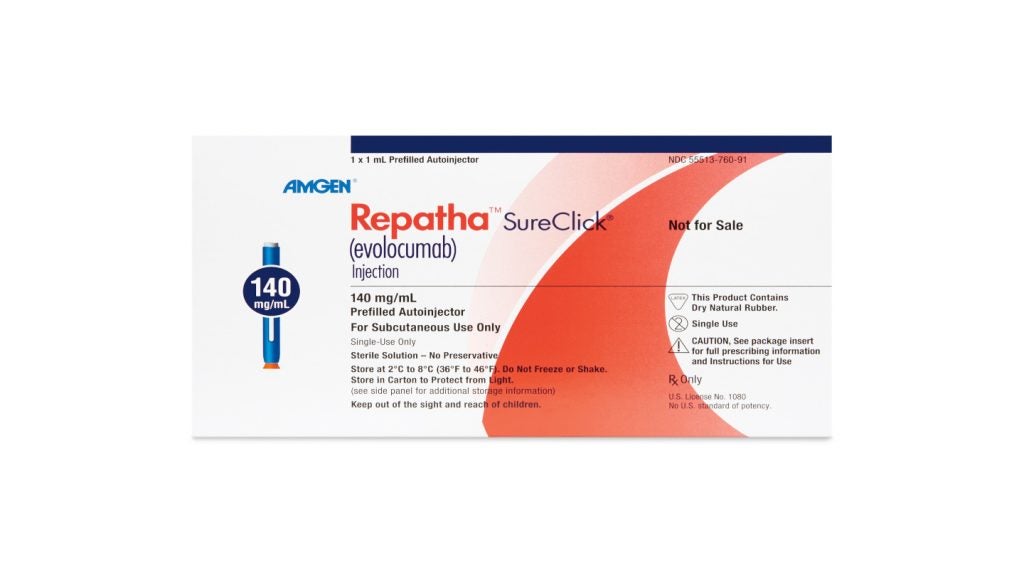
Developed by Amylin Pharmaceuticals, Byetta (exenatide) is a synthetic exendin-4 agent indicated for the treatment of type 2 diabetes in patients not on insulin and not achieving target levels with diet and standard oral medications.
In 2002, Amylin signed a worldwide agreement with Eli Lilly and Alkermes to collaborate on the development and commercialisation of exenatide for type 2 diabetes.
Recommended White Papers

Recommended Buyers Guides

Following successful completion of three large-scale phase III trials, Amylin and Lilly submitted a US NDA for exenatide in July 2004. In late April 2005, the drug received FDA approval for use as an adjunctive therapy to improve gluycaemic control in patients with type 2 diabetes who are taking metformin, a sulfonylurea, or a combination of metformin and a sulfonylurea but have not achieved adequate glycaemic control. The drug is the first and the only incretin mimetic approved by the FDA in type 2 diabetes treatment.
In 2006, the European Medical Commission granted marketing authorisation for Byetta for treating type 2 diabetes. The drug was launched in the EU market in 2007. Later that year, Eli Lilly launched Byetta in the Indian market.
Byetta was approved as a monotherapy by the FDA in November 2009. In October 2011, the it also approved Byetta as an add-on therapy to insulin glargine.
Long-acting release formulation
‘Exanetide once-weekly’, a long-acting release formulation of exanetide, is also being developed.
Amylin, Eli Lilly and Alkermes collectively conducted the third phase of investigational studies on the formulation. Recent results of the study showed indications of improvement in glucose control and fasting plasma glucose in patients taking exanetide once weekly (over one year course) compared to those who took Byetta treatment for 30 weeks.
Encouraged by the results of the investigations, Amylin initiated six clinical studies called DURATION fresh studies to prove the superiority of exanetide once weekly over Byetta in order to support regulatory submissions outside the US.
Based on data from DURATION-1 and DURATION-2, Amylin, Eli Lilly and Alkermes submitted an NDA for exanetide once-weekly branded Bydureon in May 2009. The FDA issued two complete response letters in March 2010 and May 2010 but did not recommend any additional trials.
In October 2010, Amylin, Eli Lilly and Alkermes received another complete response letters from the FDA recommending a thorough QT study on exanetide once weekly. The FDA also asked the companies to disclose the results of DURATION-5 clinical study.
Results from the DURATION-6 study were announced in March 2011. The multi-centre, open label and head-to-head clinical study compared Bydureon to Victoza injection. The results showed that patients who received Bydureon achieved a reduction in A1C (indicative of glucose control) of 1.3% points from the baseline. The patients treated with Victoza experienced a reduction of 1.5% points from the baseline.
In July 2011, Amylin, Eli Lilly and Alkermes submitted a reply to the complete response letter issued by the FDA in October 2010. The reply included additional data including results from a QT study that showed that Bydureon did not prolong QT intervals in healthy persons. It also included data from the DURATION-5 study.
The FDA categorised the reply as a Class 2 resubmission in August 2011 and set an action date of January 2012 under the Prescription Drug User Fee Act.
In September 2011, positive results were announced from the DURATION-3 and DURATION-4 studies which indicated that Bydureon was successful in improving certain cardiovascular risk factors in patients.
Byetta – a next-generation diabetes therapy
Exenatide is the first in a new class of compounds which possess similar activity to the naturally occurring hormone GLP-1 (glucagon-like peptide-1). Released from cells in the gut in response to food, GLP-1 binds to receptors on beta cells of the pancreas, thereby stimulating the release of insulin.
Exenatide mirrors the effects of GLP-1, which include glucose-dependent stimulation of insulin secretion, suppression of glucagon secretion, reduction of appetite and delay of food absorption. Since stimulation of insulin secretion occurs only in the presence of elevated blood-glucose concentrations and not during periods of normal or low blood-glucose concentrations, the risk of hypoglycaemia should be greatly reduced with Exenatide.
Exenatide may enable type 2 diabetics to control their blood-glucose levels while reducing or eliminating the risk of hypoglycaemia and weight gain, which would represent a significant therapeutic gain.
Type 2 diabetes represents a huge market to tap
The World Health Organization estimates that globally over 285 million people have diabetes. Type 2 diabetes accounts for around 90-95% of all cases. Worldwide, the costs associated with treating diabetes and its complications are estimated to exceed $200bn a year. By 2025 the prevalence of diabetes is predicted to double, driven by adverse lifestyle changes which have seen an explosion in the incidence of obesity, a risk factor for type 2 diabetes. Worldwide diabetes is a huge and growing problem and for which new treatments are needed.
Clinical trials point to potent blood glucose-lowering effects
The anti-diabetic, glucose lowering effects of exenatide have been demonstrated in a series of phase II trials. Overall these have shown that exenatide:
- Stimulates secretion of insulin only in the presence of elevated blood glucose concentrations
- Lowers post-meal glucagon concentrations
- Slows gastric emptying thereby modulating absorption of glucose into the bloodstream
- Increases sensation of fullness and satiety
- Suppresses post-meal elevations in serum triglyceride concentrations
- Lowers blood glucose concentration with concomitant reductions in levels of HbA1c
In a phase II trial in over 100 subjects with poorly controlled type 2 diabetes, the addition of exenatide to ongoing oral medication produced a statistically significant reduction in HbA1c levels compared with the average reductions achieved with standard oral medications and placebo alone.
Because patients with type 2 diabetes often need to take anti-diabetic medications long term, phase III clinical trials were designed to examine the long-term impact of exenatide on HbA1c levels.
The FDA approval for Byetta was based on three double-blind and placebo-controlled studies conducted on 1446 patients with type 2 diabetes.
The three Phase III trials assessed the effects of adding exenatide to metformin (336 subjects), sulphonylureas (377 subjects) and combinations of the two (733 subjects) in patients poorly controlled on these standard agents.
In each of the three phase III trials patients continued to use their existing oral anti-diabetic medication. Results showed that in all three pivotal studies the primary glucose control endpoint was met. Across the three studies the average reduction in HbA1c was 1% for patients on the highest 10mg twice-daily dose, while around 40% of patients on this dose achieved HbA1c measurements of 7% or less.
Patients on 10mg exenatide twice daily also showed statistically significant reductions in body weight. Long-term, open-label extensions of the trials showed these benefits were maintained for a year. Data from the phase III trials was used to file for regulatory approval.
Exenatide appeared well-tolerated by patients enrolled in the clinical trial programme, with nausea the most common adverse effect. Studies suggest this can be reduced if dosage of exenatide is increased gradually.
Amylin is also developing a once-monthly injectable suspension formulation of exenatide. A randomised, open label phase II clinical trial was conducted in 121 patients to assess the safety and efficacy of the formulation. The patients were administered 2mg weekly subcutaneous injections of Bydureon or subcutaneous injections of exenatide once a month at a low, medium or high dose.
In March 2011, positive results were announced from the study. The results showed that glucose control was enhanced with administration of one dose per month of the formulation.
Marketing commentary
Eli Lilly is already a major force in the diabetes market and the agreement reached with Amylin Pharmaceuticals for Byetta (exenatide) will strengthen its diabetes franchise. The target population for this new drug will be type 2 diabetic patients poorly controlled with diet plus metformin and/or sulfonylureas. At present these patients usually receive additional oral medications, to which insulin is sometimes added, or insulin therapy alone. Side effects, such as weight gain, are common.
Byetta (exenatide) is administered as a fixed-dose injection using a pen/cartridge delivery system. Longer-term, the aim is to have a long-acting, sustained release injection that can be given once a month.