| Abiraterone | ||
Diagram to show the microscopic appearance of tissue in near-normal (Gleason Grade 1) to advanced (Gleason Grade 5) prostate cancer. |
The type of decision tree that may be used to decide the best treatment for prostate cancer. |
Some of the organs and hormones involved in prostate cancer and its treatment using surgery or hormone-based medicines. |
The effect of blocking male hormones on the PSA level, prostate size and cancer size. |
Bone metastases in advanced prostate cancer – diagram of sites often affected. |
|
| Afinitor – Anti-Cancer Therapy, | ||
Cross-section of a solid tumour; Afinitor is undergoing clinical trials as a treatment for various tumours of this type. |
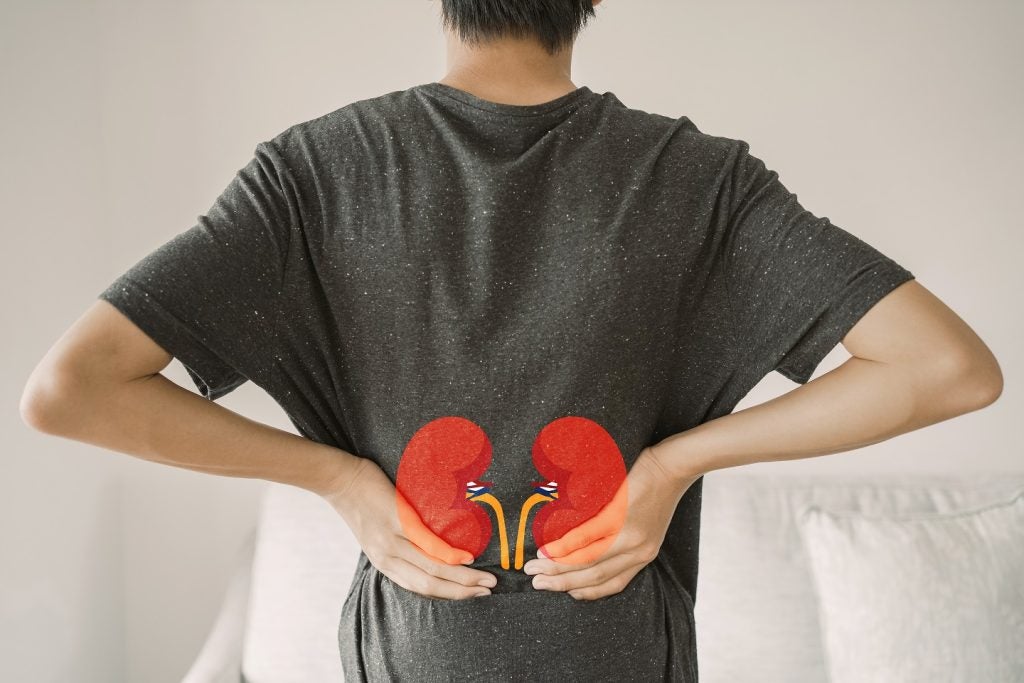
When the tumour is confined to the kidney, renal cell carcinoma (RCC) may be asymptomatic. When symptoms are present they typically include blood in the urine (haematuria), flank pain and a palpable abdominal mass. |
The lungs and soft tissues are the most common secondary sites of RCC. |
| ASA404 Vascular Disrupting Agent for Solid Tumours, | ||
Diagram of the respiratory system; ASA404 can help target the symptoms of lung cancer. |
Antisoma's ASA404 is a vascular disrupting agent (VDA) that is designed to attack the established blood vessel network within a tumour. |
The process by which a tumour spreads from the primary site in the body, such as the lungs, to other sites. |
| Avastin (bevacizumab) - Angiogenesis | ||
Avastin has become the first angiogenesis inhibitor to market; it secured US FDA approval at the end of February 2004 for use as a first-line treatment for patients with metastatic colorectal cancer. |
Angiogenesis inhibitors are designed to stop tumours from developing a blood supply, a pre-requisite for tumour growth and metastasis. (Source: ABPI) |
Tumour angiogenesis. (Source: ABPI) |
Cross-section of solid tumour. (Source: ABPI) |
Roche R&D Centre, Basle. |
Drug development and approval process. |
To meet the growing demand for licensed products and new drugs coming on stream, Genentech is increasing production capacity. |
||
| Blinatumomab | ||
Blinatumomab is a new monoclonal antibody aimed at targeting lymphoma, in Phase I and II trials for NHL and ALL respectively. |
In lymphoma, lymphocytes start reproducing in an abnormal manner, pile up and gather in some parts of the lymphatic system, and become susceptible to infection. Blinatumomab binds to cancer cells and T cells to fight lymphoma. |
Micromet hopes that its new drug blinatumomab will be a promising new treatment for cancer with minimal side effects. |
| Cervarix – Cervical Cancer Vaccine | ||
Persistent infection with oncogenic types of human papilloma virus, such as types 16 and 18, can lead to the development of cervical cancer. |
Cervical cell abnormalities are classified as CIN 1-3. CIN 1 describes mild dysplasia, in which the cells often revert to a normal histological pattern. |
In its early stages, cervical cancer is usually asymptomatic. Cervical cancer screening is important in detecting potentially pre-cancerous lesions. |
Staging is important in determining the extent and spread of a cancer and the type of treatment likely to be most effective. |
In the UK, GSK markets over 25 prophylactic vaccines for the prevention of serious infectious diseases. Cervarix is one of its most recent additions to the list. |
|
| Dasatinib - Tyrosine Kinase Inhibitor for Chronic | ||
Some pathways and colony forming units (CFU) involved in the formation of blood cells |
Relationship between stage of maturation of white blood cells and common forms of blood cancer |
The t(9:22) chromosome translocation in CML |
Onset of CML, showing that peak occurrence is in people aged 50-70 years. Incidence is slightly higher among males than females |
Rates of response and survival at 5 years in trials of chemotherapy, interferon and imatinib for CML |
|
| Elotuzumab | ||
Solid constituents of blood and their proportions in normal blood; multiple mylemoa disrupts normal production of red blood cells, platelets and white cells. |
Some pathways and colony forming units (CFU) involved in the formation of blood cells. |
Common forms of blood cancer; multiple myeloma is the second most common haematological malignancy. |
Relationship between stage of maturation of white blood cells and common forms of blood cancer. |
Some of the events that take place in the bone in multiple myeloma. The Y-shaped objects emerging from the plasma cell represent the antibodies produced by drugs such as elotuzumab to fight the tumour. |
|
| Erbitux (Cetuximab) | ||
One of several new cancer biotherapies, Erbitux is currently in advanced-stage development for the treatment of several solid tumours. |
Inhibition of EGFR prevents tumour growth and dissemination as well as inducing cell death (apoptosis). (Source: ABPI) |
Over expression of EGFR correlates with increased metastasis, decreased survival and a poor prognosis. (Source: ABPI) |
Erbitux is a chimaeric monoclonal antibody (MAb) specific for the EGFR. |
Erbitux has been approved for use in metastatic colorectal cancer in both Switzerland and the US. |
In July 2002, ImClone Systems secured FDA approval for the production of Erbitux for use in clinical studies. |
| Hycamtin – Anti-Tumour Drug for Treatment of Relapsed Small Cell Lung Cancer | ||
Hycamtin's main indication is as an IV-administered treatment or oral capsules for the treatment of small cell lung cancer. |
SCLC is most commonly caused by smoking, but can also be caused by environmental factors. |
Hycamtin has also been proven to be suitable in the treatment of other cancers, including ovarian and cervical cancer. |
| Ixempra (Ixapebilone) – New Cancer Therapy | ||
Structure of the breast and mammary gland. |
The most common cancers diagnosed in women in the UK in 2001 out of a total of over 136,000 cases. |
The mechanism by which tumour cells spread from the primary site via blood and lymph to other sits in the body. |
Diagram showing the most likely sites for local and distant spread of metastases in secondary (advanced) breast cancer. |
An illustration of how tumour cells develop resistance to chemotherapeutic agents, reducing their clinical effectiveness. |
Ixabepilone is a microtubule inhibitor that stops cells separating during the G2 phase of the cell cycling. |
| KRX-0401 (Perifosine), | ||
KRX-0401 is undergoing clinical trials for its use as treatment for multiple myeloma and multiple other forms of cancer. |
Multiple myeloma is an incurable cancer occurring in the plasma cells. |
In August 2009 Keryx began Phase III trials for KRX-0401, in combination with other drugs, with the primary endpoint of survival without progression. |
| Nexavar – Oral Anti-Cancer Agent for Treatment of Liver and Kidney Cancer | ||
Nexavar is an oral anti-cancer agent for the treatment of kidney and liver cancer. |
The clinical efficacy and safety of Nexavar has been proven in a series of clinical trials. |
Nexavar is undergoing further clinical trials to determine its effectiveness in combination with other liver and kidney cancer treatments. |
Liver cancer is the sixth most common globally. |
Nexavar inhibits cell growth and the formation of tumour angiogenesis by working along the multiple signalling pathways. |
|
| Pertuzumab –Cancer Therapy | ||
Structure of the breast and mammary gland. |
The most common cancers diagnosed in women in the UK in 2001 out of a total of over 136,000 cases. |
The mechanism by which tumour cells spread from the primary site via blood and lymph to other sites in the body. |
Diagram showing the most likely sites for local and distant spread of metastases in secondary (advanced) breast cancer. |
||
| Stimuvax - Investigational Therapeutic Cancer Vaccine | ||
Stimuvax is an investigational therapeutic vaccine for treatment of advanced non-small cell lung cancer (NSCLC) and breast tumours. |
Stimuvax is designed to provide immunity against the cancer cells that over express Mucin 1 (MUC-1). |
Stimuvax was the first investigational cancer vaccine to enrol patients for Phase III studies for NSCLC. |
The Phase III clinical trial of Stimuvax, INSPIRE, was started on 10 December 2009. |
||
| Tarceva - Small Molecule | ||
Tarceva (erlotinib) is an oral anti-cancer drug under development by OSI Pharmaceuticals, Genentech and Roche. |
Over expression of EGFR is common in many solid tumours. (Source: ABPI) |
Tarceva works by inhibiting receptor tyrosine kinase activity, the protein product of the EGFR gene. (Source: ABPI) |
Roche R&D Centre, Basle. |
||
| Tesmilifene - Chemopotentiator for Cancer | ||
An illustration of how tumour cells develop resistance to chemotherapeutic agents reducing their clinical effectiveness. (Source: ABPI) |
An illustration of how multidrug resistant inhibitors (MDRIs) can block the p-glycoprotein (Pg) of resistant tumour cells and restore senstivity to cancer drugs. (Source: ABPI) |
Cross-section of a tumour showing the invasive zone and the inner zone where oxygen and nutrient supply is reduced. (Source: ABPI) |
The mechanism by which tumour cells spread (metastasise). (Source: ABPI) |
||
| Tykerb - Dual Tyrosine Kinase Inhibitor | ||
erbB receptors consist of three components: the extracellular domain to which ligands bind; a transmembrane domain; and an intracellular domain that includes tyrosine kinase. |
Cross-section of a solid tumour. (Source: ABPI) |
The processes in which a tumour spreads from the primary site. (Source: ABPI) |
| Zactima - Tyrosine Kinase Inhibitor | ||
Cross-section of the lungs. |
Cross-section of a solid tumour. |
The processes in which a tumour spreads from the primary site. |
The cell cycle showing the points at which some classes of anticancer agents act. |
Tyrosine kinase inhibitors are now used to treat several cancers including NSCLC. |
NSCLC accounts for about 80% of all lung cancers. |
| Zybrestat - Vascular Disrupting Agent and Cancer Therapy , | ||
Combretastatin was first isolated from the bark of the African bush willow tree, which grows in the Eastern Cape region of South Africa. |
Molecular structure of combretastatin, an anti-cancer medicine that can now be synthesised. |
Drugs that target tumour blood supply represent an important new therapeutic approach to the treatment of solid tumours. |
Cross-section of a solid tumour. |
Illustration of the processes in which a tumour spreads (metastasizes) from its primary site. |
|